
Băneasa Residential Area. Past. Present. Future.
Back to blogYou might walk by every day, but do you know the story behind the alleys in the Băneasa neighborhood?
From the old Estate of Ecaterina Văcărescu of Bâneasa and until Tokyo Metro station, are less than 300 years of history. But since then, from the times when Little Paris was a very well-organized city, a city where you could find anything, from pharmacies open at night, on a rotating basis, to trams that ran until 1 AM, and up to the present day, some things have changed in the beautiful capital.
In a Official Guide of Bucharest from 1934, which with a little luck you can find in second-hand bookstores, here is how the city is described:
„What makes the capital charming is its liveliness and optimism. Bathed in light, favored by a healthy climate, from dawn till night, the city buzzes with intense work life while offering the most varied entertainment options.
From 11 AM until lunchtime, to resume again from 5 PM until evening, Victory Avenue bustles with people eager for a stroll and the free spectacle presented by this coming and going on the section between Elisabeta Boulevard and the Palace, while Kiseleff Road is more suited for car rides and equestrianism.
As soon as the day's fruitful and intense activity ceases with the fall of evening, a dense crowd invades the center, attracted by the multicolored lights of shop windows and advertisements. Theaters, cinemas, restaurants, bars, and dance halls tempt the passerby dazed by the intense traffic, the lights, and the noise.
Bucharest lives its nightlife with all the cheerfulness and optimism that characterize this welcoming, pleasant, and varied city.”
Different, yet similar. Or as Eminescu would say: Everything is old, and everything is new. 🙂
We invite you to discover further what's old and what's new.
The Băneasa Zone, from an old village to a top Bucharest neighborhood
Almost 300 years ago, in this part of the country, there was an old village called Cârstănești. The rural area came into the possession of the noblewoman Ecaterina Văcărescu in 1761, the widow of the great ban Șerban Văcărescu. The rank of ban represented a high territorial dignitary at that time, meaning it was the highest boyar title awarded in Wallachia.
After Ecaterina Văcărescu she became the owner of these lands and shortly thereafter decided to build the Church of Saint Nicholas on the left side of DN1.
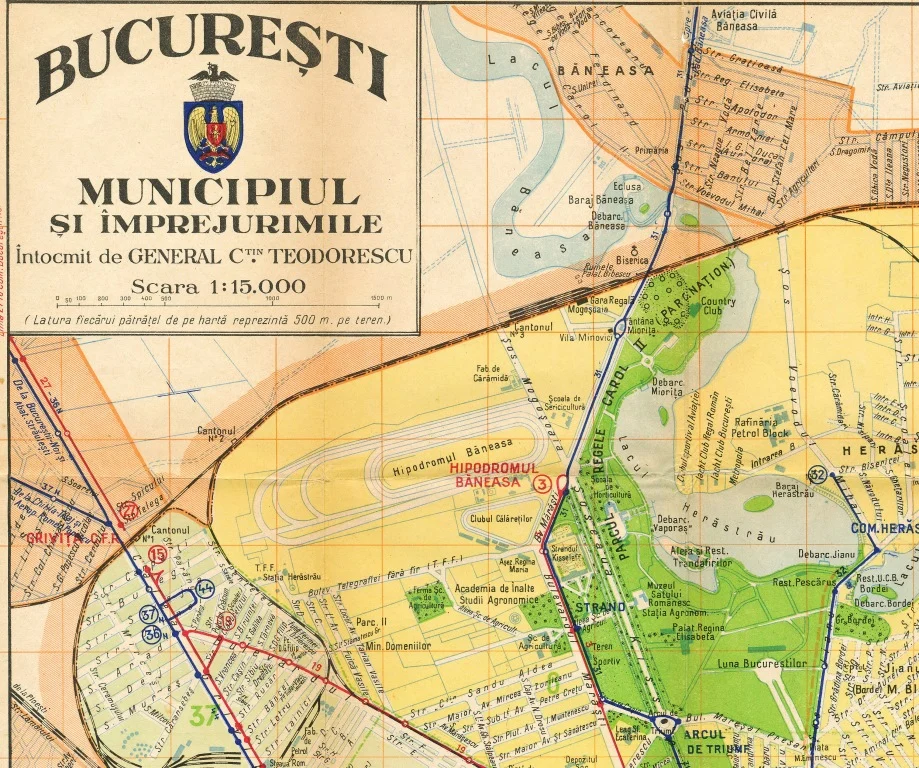
In the interwar period, Cârstănești village it was transformed into a commune. Many of the inhabitants of this area were involved in preparing milk and cheeses. It is said that the girls from the village also transported and sold dairy products in the town every morning, carrying churns (wooden containers with handles and lids) of cream and cheese on their shoulders.
After 1950, Cârstănești commune was administratively included in Bucharest municipality., thus becoming a district of the Capital. It took its name from the owner of the lands, Ecaterina Văcărescu, whom the inhabitants called “Băneasa” (the wife of the ban).
Another important historical event related to the Băneasa area took place on May 10, 1866. On the occasion of the future King Carol I entering Bucharest, he was handed in Băneasa city center, as a welcome gesture.
The entire Băneasa neighborhood is also a historical witness to the installation TFF station (Wireless telegraphy) from Herăstrău, with a power of 150 kW, in the year 1915. This played an important role for Romania in World War I, being the only means of rapid communication with its allies.
The Băneasa area gradually approached what we know today, starting its development in the first part of the 19th century. Rectangular streets and plots of at least 400 sqm were laid out. Both in the interwar period and afterward, many single-story houses were built, and during the period 1980-1985, a large part of these houses were replaced by apartment blocks.
The story of the key objectives of the Băneasa neighborhood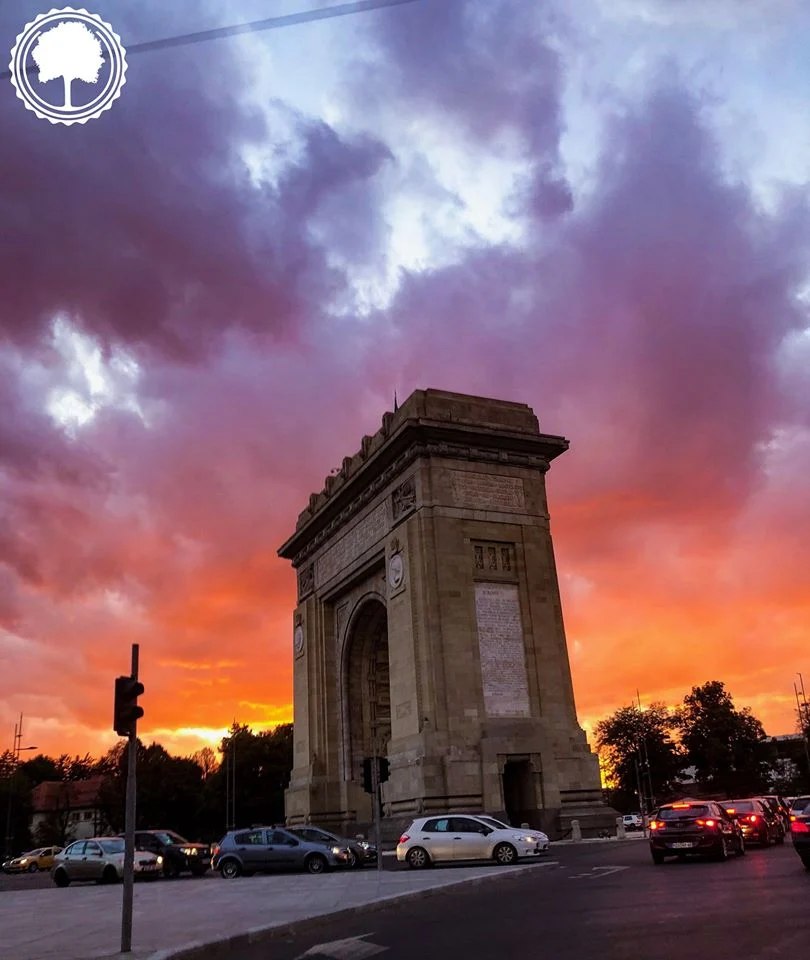
When it comes to Bucharest's tourist attractions, the Băneasa neighborhood significantly enriches the Capital's map. At the top of the attractions are The Arch of Triumph, The Village Museum, Herăstrău Park, The Free Press House, The Miorița Fountain and important villas such as – Vila Nicolae Minovici and Vila Dumitru-Furnica Minovici, the last one also being the one that hosts Museum of Old Western Art.
Triumphal Arch Monument it was designed by Petre Antonescu, built between 1921-1922, and renovated between 1935-1936. It represents a symbol of Romania's victory in World War I, but also an element that reminds us of the creation of Greater Romania and the coronation of King Ferdinand I and Queen Maria.
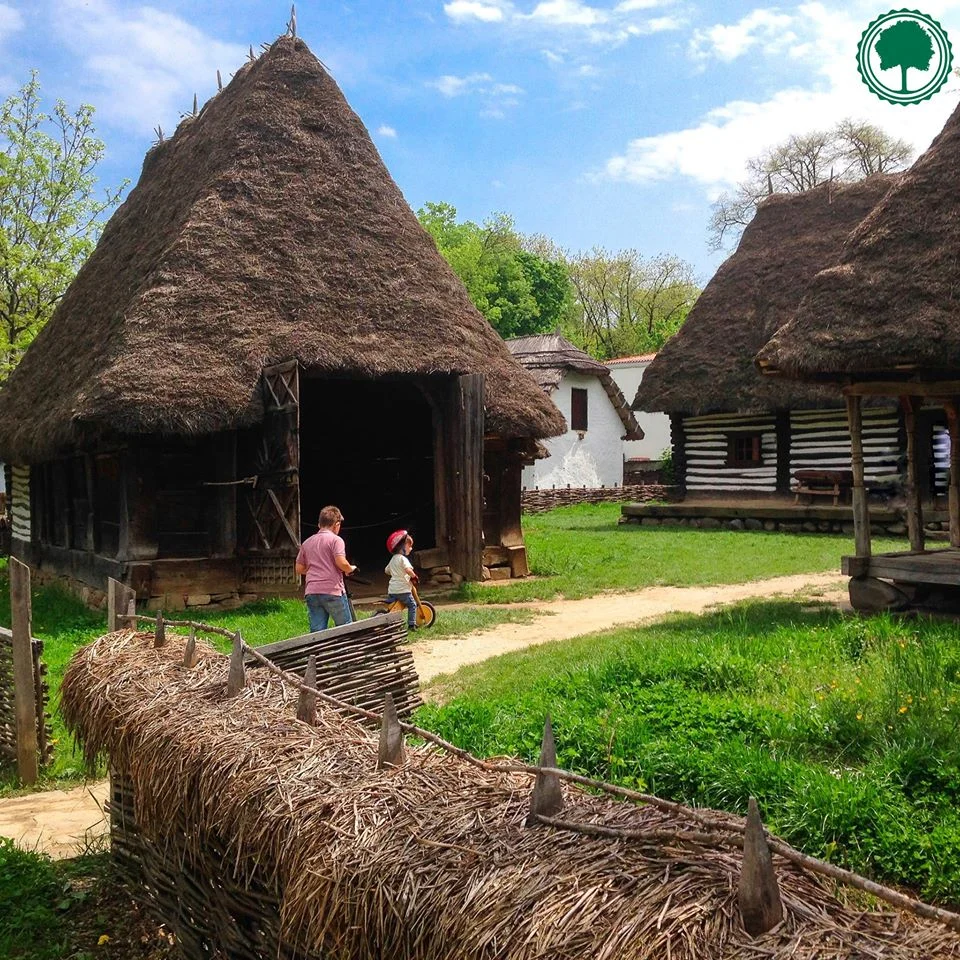
In terms of popularity, the objective is closely followed by the Village Museum and Herăstrău Park. The first attraction, „The museum in the heart of the capital”, also known as, opened its gates to the public on May 10, 1936, when it was inaugurated by King Carol II. To build it, houses were dismantled piece by piece, transported by train, cart, or boat to Bucharest, where they were reassembled on the museum's grounds on the shore of Lake Herăstrău.
Currently, the permanent exhibition of Village Museum covers an area of 14 hectares with 380 monuments, 60,000 objects in the heritage collections, and over 250,000 archival documents related to the village and its traditional life.
Herăstrău Park, named King Michael I Park of Romania since 2017, is considered the most spectacular and diverse park in the capital. Few know that the name “Herăstrău” comes from a sawmill, i.e., a mechanical saw, which was located on the lake shore, near the bridge. This was a popular object in the 1600s, as historical documents attest. Today, in the year of our Lord 2019, you can easily get lost in the park's alleys and admire the Expo Flora area, the Rose Island, the Poplar Island, or the Japanese Garden.
Although they are not considered tourist attractions, Băneasa Airport and Royal Race are representative of this area of the city and have a rich history behind them.
The first press appearance of Bucharest Băneasa – Aurel Vlaicu International Airport It was on June 7, 1910, that Aurel Vlaicu presented some aerial maneuvers with an airplane he built himself at an aviation rally held at the former hippodrome in the area. However, the French aviator Louis Blériot was the first pilot to conduct recreational flights at the old Băneasa hippodrome. The airport runways were laid out starting in 1920, and the building and control tower we see today date back to the 1960s.
At the entrance to the Băneasa district, in front of the Nicolae Minovici Folk Art Museum, there is The Miorița Fountain, a monument with a special symbolism for Romanians. The objective was made of Dobrogea granite and was inaugurated in 1936 according to the plan of architect Octav Doicescu. The drawings masterfully illustrate the ballad Miorița, a true masterpiece of Romanian literary folklore.
Also in this area is Royal Race, a structure dating from 1936. It was built by the General Directorate of CFR according to the plans of architect Duiliu Marcu, with the purpose of being used only by the Royal Family of Romania. After being closed for the past 10 years, Bucharest's 2020 development plans also include the reopening of this Station.
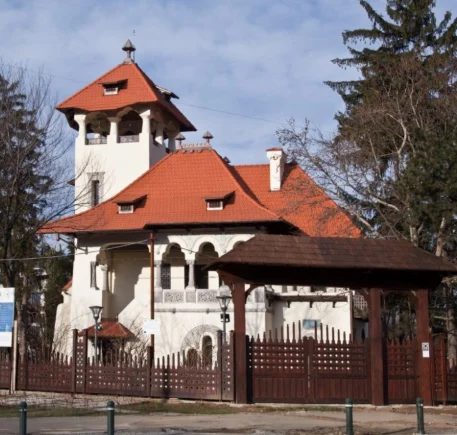 Nicolae Minovici Villa and Dumitru-Furnică Minovici Villa There are two cultural treasures worth exploring for valuable artifacts dating back to the 17th century.
The interior captivates with its displayed decorative elements – stained glass, tapestries, carpets, statues, and furniture that blend harmoniously to create an época story.
Another significant landmark in the Băneasa neighborhood is House of the Free Press, initially known as The House of the Spark, which held the record for the tallest structure in the city between 1956 and 2007.
Currently, Băneasa district It covers an area of 25 hectares and is in continuous development. Thanks to all the benefits it offers, from easy transportation to the rest of the city to the oases of peace and clean air represented by Băneasa Forest and Lake Herăstrău, this area has become highly coveted in the Capital.
For the history of Romanians, the forest has a special connotation.
Since we've known each other, „The forest is a brother to the Romanian”, because it was the place where people sought refuge from foreign invasions and later became the hideout of outlaws.
Vlasiei Woods They once covered a large part of southern Romania, and the road connecting Bucharest to Mogoșoaia Palace was built through them (now Calea Victoriei, following the War of Independence). Today, only sporadic remnants of the Vlasia Forests remain, and the Băneasa Forest is one of them.
Few people know, but next to Băneasa Forest is a mausoleum left to ruin, raised by one of the wealthiest families of Romania in the last century: Blank family. This invested in the construction of the railway, but also in the capital's sewage system.
How do you get to the Mausoleum? It can be seen across the street from the Police Academy and is so well hidden by oak trees that only pedestrians can spot it. With no inscription and a thick chain across the doors, you’ll see a brick building, up to 10 meters tall, with a high vaulted ceiling, hidden among ivy and trees.
How will the northern area of the city transform in the coming years?
One business card It is becoming increasingly evident near Piața Presei Libere, the Expoziției – Domenii area, and the developments that will lead to the city's growth are not far behind.
The city grows by the day in terms of both population and residential areas, as well as new real estate projects developed in the outskirts of town.
One of the most anticipated pieces of news perhaps refers to Băneasa Airport reopening Starting in May of next year (editor’s note: 2020). Buildings A, B, and the Rotunda will be completed. In addition to the absolutely necessary interior renovations, there will also be work related to the building’s architecture, in compliance with the standards imposed by the cultural commissions for a Category A historic monument.
Both Băneasa Airport and Otopeni will be connected to the project Metrou de magistrală 6 Mai – Tokyo.
Starting in 2020, the works will also begin Otopeni Airport modernization, by developing two new terminals, of 18,000 square meters and 26,000 runways. The expansion project includes a new terminal, an 8,000-space parking lot, a 5,000 sq m business center, a 200-room hotel, a passenger terminal, a platform for cargo transport, and an internal metro.
Essentially, Otopeni Airport will double in size following this expansion. The airport’s development plans should come as no surprise, given the 123% increase in passenger numbers over the past ten years. That amounts to no fewer than 14 million people taking off and landing each year.
Given the increasing number of avid travelers, along with the modernization of the airport, there are also plans for extension of the M6 metro line, which connects Bucharest with the airport.
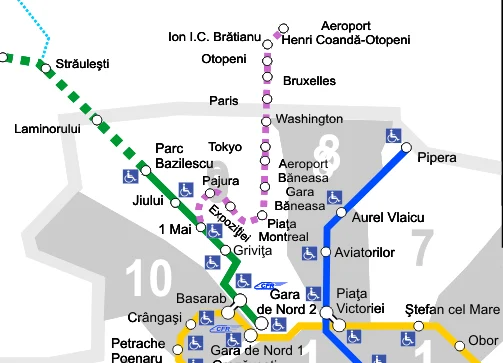 Six new subway stations will connect 1 Mai to Tokyo Station (Băneasa Mall area).
The investment of 1.3 billion lei will be financed by the European Commission and is non-reimbursable. The completion deadline is 48 months.
The major advantage for the city's residents: the M6 metro line will effectively start from Gara de Nord and reach Otopeni without passengers needing to change trains.
The pace of a city's development is also reflected in the public transport options available to its residents.
And if until now we have talked about air and underground traffic, above ground is not left behind either:
future development plans include Reopening of Băneasa Station from the North of the Capital, but also a new three-lane artery, which will start from Avionului Street, Aviation neighborhood, will cross ANL Henri Coandă, then will tunnel under the Băneasa airport runway and will continue to the Zoo area, then through Băneasa Forest, on Vadul Moldovei road up to the Beltway.
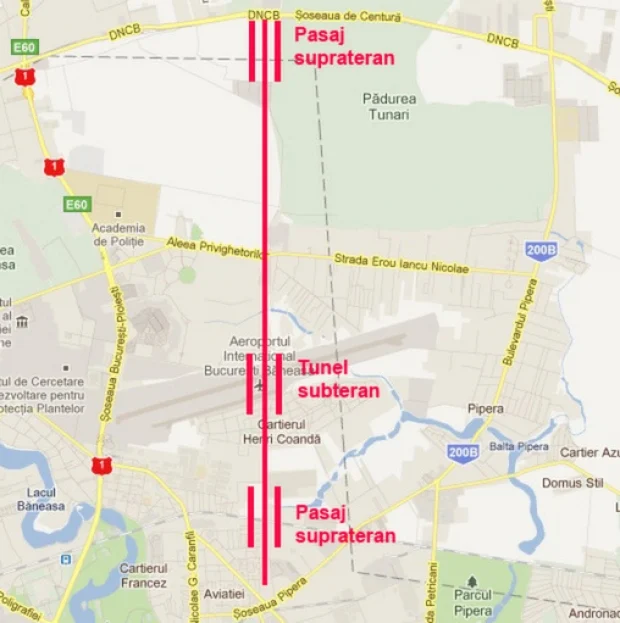 In the underground tunnel, access will be from the ANL Henri Coandă neighborhood, near the airport runway, and the exit will be behind the Băneasa commercial complex.
For Greenfield residents, this new artery means quick access to the Ring Road, but also direct access to the Aviation district.
In Coana Mița Biciclista's time, shops were standalone businesses.
Nowadays, Băneasa Shopping City it counts 364 stores, and development plans include a new project, a greenfield investment, composed of commercial, residential, and office areas.
According to a KPMG study conducted in 2017, by 2027 the Băneasa platform can generate over 1.9 billion euros in salaries, supporting over 30,000 jobs in 2026.
However, this will not be the only mall in the area.
To be opened Greenfield Plaza, a project with a launch deadline of the first quarter of 2021, on an area of 17,200 square meters, which can be reached by personal car, public transport, and subway – access will be from Washington station, at Magistralei M6. The project will include areas dedicated to the Greenfield Residence neighborhood community. However, these may also be of interest to residents of nearby areas, such as those in Otopeni.
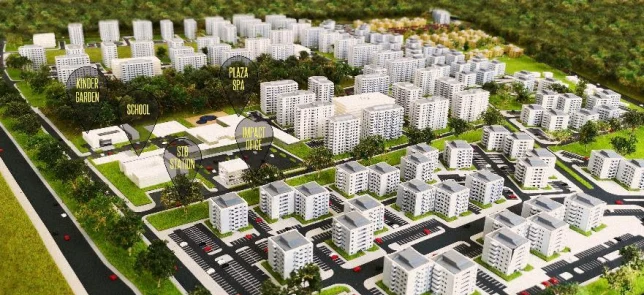
Inclusiv the Greenfield residential project provides an increase in the number of inhabitants to almost 17,000 people by 2028.
Bucharest And its entire story, with its ups and downs, with beautiful people, with areas and neighborhoods with interesting histories, with parks, with investments that just a while ago we couldn't even imagine, continues to surprise and attract us. It's a city of contradictions, and perhaps that's exactly why you can't help but love it.