
How was the GREENFIELD neighborhood near Băneasa Forest built?
Back to blogWere trees cut down to build GREENFIELD Băneasa?
To answer this question clearly, if trees were cut down to build the Greenfield Băneasa neighborhood, we need to understand that the urban landscape is constantly changing, whether naturally or through human intervention. Nothing stays the same, especially in ever-evolving cities. It's absurd to believe that only technology evolves, while cities' infrastructure and size would remain unchanged for centuries.
Bucharest, Romania’s main economic and cultural center, has a rich history and a complex urban dynamic. Over the centuries, the city has undergone a continuous process of urbanization and expansion, reaching an area of 240 km², of which over 70% is built-up area.
In this context of intense urbanization, we want to clarify misconceptions about the over 60-hectare plot of land on which the neighborhood is currently located. GREENFIELD Băneasa.
History of the land where the GREENFIELD Băneasa neighborhood was built
There is clear evidence, both old and new, showing that there has been no forest on this land in the last hundred years. A map of Bucharest from almost a century ago, available online under the name „Bucharest Map with Surroundings 1934 Socec”indicates that the area where the Greenfield Băneasa neighborhood was built was former agricultural land, located on the border between the Băneasa and Tunari forests. This shows that land use has evolved over time.
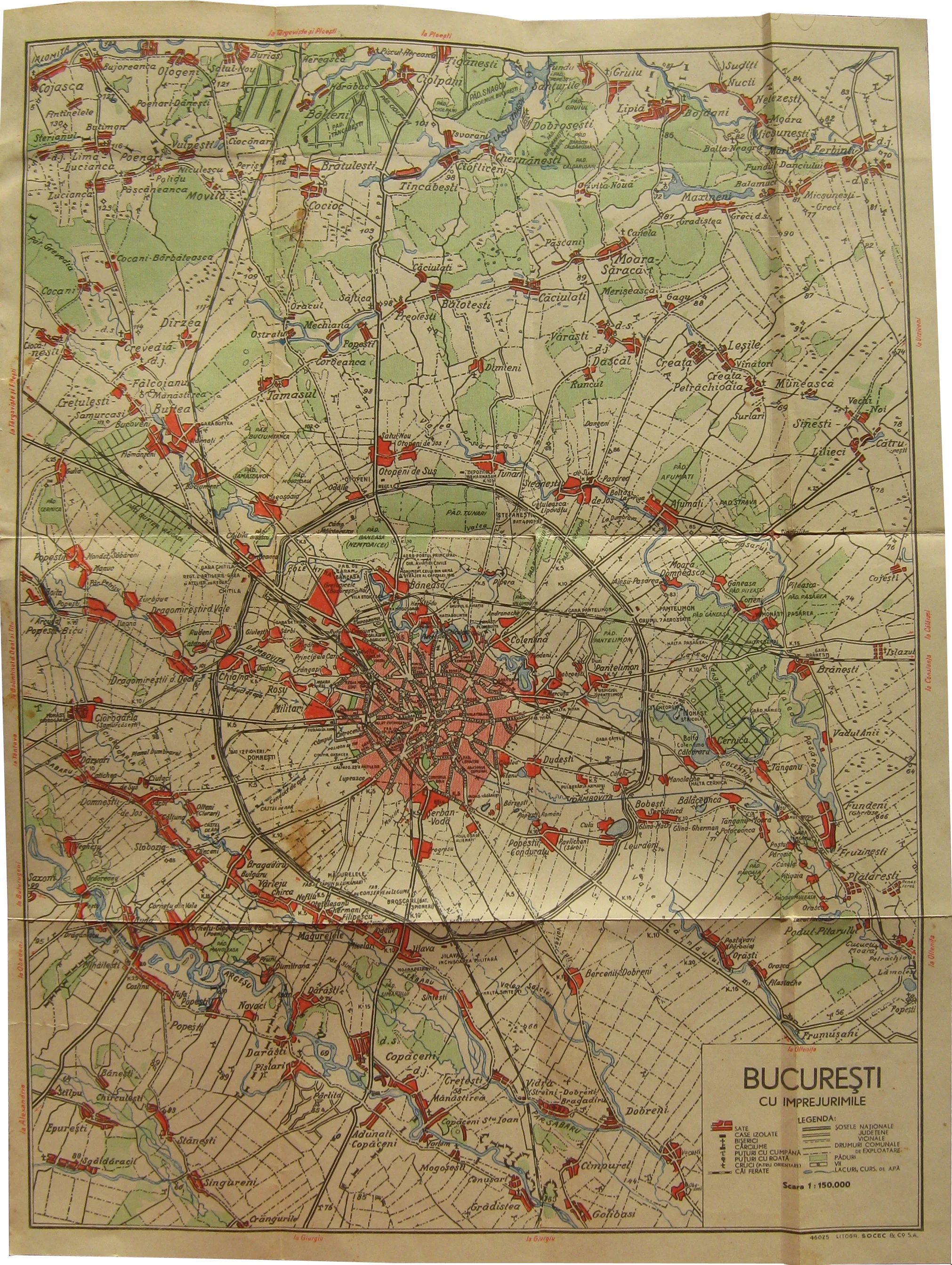
Bring modern developments and responsible land assessment to the area where the GREENFIELD Băneasa neighborhood was built.
Recent data, such as the historical area presented by Google Earth, confirm the same thing. In the area where the Greenfield Băneasa neighborhood has been developing since 2007, there was no forest.
The area for the GREENFIELD Băneasa residential complex was carefully evaluated, taking into account both its history and the current needs of the community.
Although the area was not covered by forest in the past, due to its proximity to Băneasa Forest, known as „the capital's green lung,” a responsible approach was adopted in the project's development, focusing on conserving existing green spaces and minimizing environmental impact.
The GREENFIELD Project and Sustainability
The project has complied with all legal procedures and undergone environmental impact assessments, thus ensuring sustainable development. The new development phases are designed to meet the BREEAM Excellent certification criteria.
The developer of the GREENFIELD Băneasa neighborhood, Impact, has initiated significant environmental protection actions. Among these are eco-cleanup and afforestation campaigns.
Within these campaigns, tons of waste were collected from Băneasa Forest, and through the community afforestation project, over 4,500 trees will be planted by the project's completion, adding to the 3,500 already existing. These efforts underscore the developer's commitment to sustainability and the quality of life for residents.
No tree felling for construction of GREENFIELD Băneasa
In conclusion, No trees were cut for the construction of the GREENFIELD Băneasa neighborhood. Constant efforts to protect and improve the environment demonstrate a deep commitment to sustainability and ecological responsibility.
Thus, residents can enjoy a healthy environment and a high quality of life in a modern neighborhood well integrated into Bucharest's urban landscape.